


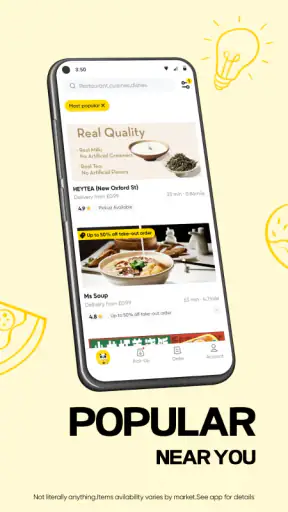
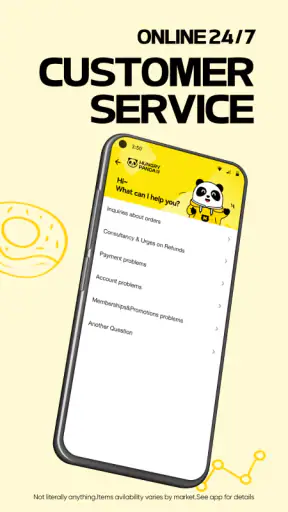
I approach food-delivery apps with two questions: can they help me get the meal I actually want, and do they give me enough control while I use them? HungryPanda sits in a fairly focused space, built around Asian food delivery and takeaway rather than trying to be an all-purpose shopping service. That focus is useful when I am looking for familiar regional dishes, specialist restaurants, or ingredients and meals that may be harder to find in a general delivery app.
HungryPanda is a free Food & Drink app from HungryPanda, available for Everyone and compatible with Android 7.0 or later. It has passed the point of being a little-known experiment: the app has more than a million installs, an average rating of 3.9 from roughly 7,700 ratings, and 621 written reviews. Those figures suggest a service with a substantial audience, although the rating also tells me to keep expectations practical rather than assuming every order will be perfect.
I spent most of my attention on the parts that affect trust: what the app lets me control, where I need to make decisions carefully, and how much confidence I would have before placing an order. My overall impression is positive for the right audience, but I would not treat it as an automatic replacement for every local delivery option.
How HungryPanda earns trust, and where I still need to pay attention
A specialist service rather than a generic restaurant directory
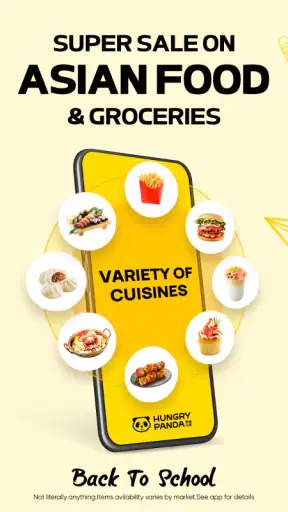
The clearest reason to try HungryPanda is its identity. Instead of presenting itself as a broad marketplace for every kind of meal, it concentrates on authentic Asian food, delivery, and takeaway. That makes the app most appealing when cuisine and restaurant selection matter more to me than having the largest possible collection of unrelated dining options.
In everyday use, that focus can shorten the search process. If I already know I want noodles, dumplings, hotpot, rice dishes, or another Asian meal, I would rather start in a service organized around that interest than scroll through a general app filled with burgers, pizza, convenience items, and unrelated promotions. The narrower purpose is also helpful when I am ordering for friends or family who have a specific regional preference.
There is a trade-off. A specialist catalogue may not be the best choice for a mixed group where everyone wants something different, or when I simply want to compare every nearby restaurant in one place. A larger general-purpose delivery app may offer broader coverage, more familiar local venues, or a smoother fallback when the restaurant I want is not available through HungryPanda.
What the public signals tell me
The app was released on December 30, 2016, and its current version is 8.89.0. That long presence and continuing version history give me more confidence than an app that appears to have been abandoned after launch. At the same time, longevity is not proof that every part of the experience is equally polished. Delivery quality depends on the restaurant, the courier process, the local market, and the accuracy of the order details as much as it depends on the app itself.
I also pay attention to the difference between a numerical rating and written feedback. A 3.9 average is respectable, but it is not a signal to ignore possible friction. When I use a service with that kind of rating, I check the restaurant information, the order summary, the delivery destination, and the final cost instead of assuming the app will catch every mistake for me.
The controls I want before placing an order
A trustworthy delivery experience begins before payment. I want to know which restaurant I am ordering from, whether the order is for delivery or takeaway, what items are included, and where the food is going. I also want the final total to be understandable before I commit. These checks are especially important in a specialist marketplace because dish names, portion descriptions, and menu conventions may differ from what I normally see in a general food app.
My practical workflow is simple. I first set the destination, then browse the restaurant rather than choosing a dish immediately. I look at the menu as a whole, check whether the restaurant appears suitable for the occasion, and only then build the basket. Before confirming, I reread every customization, serving choice, and note. This takes less than a minute and is more reliable than trying to correct an order after the kitchen has started preparing it.
The most useful control is the pause before confirmation. I treat the final review screen as a decision point, not a formality. If the address, order type, or item selection is wrong, I would rather abandon the basket and start again than rely on support to repair a preventable error.
Account choices and personal information
Food delivery naturally involves personal details such as a delivery destination and contact information. I would create an account only when the convenience is worth it to me, and I would use the account controls to keep details current rather than entering a different version of my address every time. An outdated address is not just untidy; it can create a real delivery problem.
I also avoid placing sensitive information in free-text delivery notes. A note should help the courier find the entrance or understand a practical delivery instruction. It does not need unnecessary personal background, access details unrelated to the delivery, or information that could identify other people in the household. Keeping notes short is a small but sensible privacy habit.
When an app asks for access or information, I prefer to make the choice in context. If a permission is optional for browsing or takeaway planning, I would rather continue without it until I understand why it is needed. If a function genuinely depends on a setting, I want the app to make that relationship clear instead of pushing me to approve everything immediately.
Data-sensitive moments during ordering
The most sensitive part of using a delivery service is not browsing a menu; it is completing an order. At that moment, I am combining food preferences, location information, contact details, and a transaction. I therefore slow down at the basket and checkout stages. I check that the delivery address is the intended one, especially if I have recently ordered for another person or another location.
I take the same care with takeaway. It can be tempting to assume that choosing collection makes the process automatically simpler, but I still need to confirm the restaurant, the pickup arrangement, and the order details. A takeaway order sent to the wrong venue is just as inconvenient as a delivery sent to the wrong address.
Notifications are another area where I want user choice. Order updates can be useful, particularly when I am waiting for food, but I do not want every alert to become a distraction. I review notification settings on my phone and keep only the alerts that help me act. This is not a criticism unique to HungryPanda; it is a sensible way to stay in control of any delivery app.
I would also avoid treating a saved account as a reason to stop checking. Saved addresses and preferences are convenient, but convenience can hide an old selection. Before an important order, such as food for guests or a meal sent to someone else, I manually verify the destination and the order type even if the app remembers them.
Real-world scenario: ordering for a busy evening
Imagine I am finishing work late and need dinner for two people with different tastes. I would open HungryPanda because the Asian-food focus gives me a better starting point than a general list of restaurants. I would first decide whether delivery or takeaway makes more sense. If I am already passing near the restaurant, takeaway may give me more control over timing; if I am staying home, delivery is more convenient but depends on the destination being entered correctly.
I would then compare menus rather than choosing the first restaurant that looks familiar. One useful habit is to separate “what sounds good” from “what will travel well.” Fried items, soups, noodles, and delicate dishes can behave differently during a journey. I would consider how long the food may sit before eating and choose a menu that suits the situation, not just the photograph.
For shared meals, I would reread the basket one item at a time. This catches duplicate dishes, missing sides, and accidental customizations. I would keep delivery notes practical and avoid adding private information. Once the order is confirmed, I would use the available status information as guidance rather than promising guests an exact arrival time that may change.
This workflow shows where the app helps and where personal judgment remains necessary. HungryPanda can make specialist discovery easier, but it cannot remove the need to check portions, dietary suitability, timing, or the reliability of a particular restaurant.
Dietary needs require extra care
I would not rely on a dish name alone when allergies or strict dietary rules are involved. Asian menus often use sauces, broths, marinades, and shared preparation areas in ways that are not obvious from a short description. I would read the restaurant’s item information carefully and contact the restaurant through the appropriate channel if I needed a firm answer.
This is also a situation where a direct restaurant relationship may be better. If the requirement is medically important, speaking with the restaurant directly can provide more confidence than depending on a marketplace menu. HungryPanda is useful for discovering options, but discovery is not the same as a guarantee about ingredients or preparation.
Where the app is stronger than usual alternatives
Compared with a general delivery app, HungryPanda’s advantage is relevance. I am less likely to spend time filtering away unrelated restaurants when I already know I want Asian food. That can make the first stage of ordering feel more purposeful, especially for people who regularly seek particular cuisines rather than ordering whatever happens to be promoted.
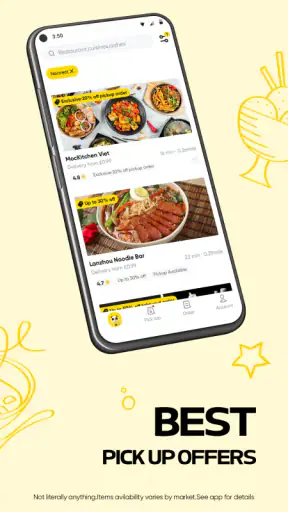
The delivery-and-takeaway combination is another practical strength. I can use the same specialist starting point for a meal at home or a collection order, which is useful when my plans change. For someone who alternates between ordering in and picking food up on the way home, that flexibility is more valuable than a service focused on only one format.
Where a different option may be better
I would choose a broader delivery service when restaurant variety is the priority, when I need groceries and prepared food together, or when the people I am ordering for want completely unrelated cuisines. A restaurant’s own ordering channel may also be preferable when I already trust that restaurant and want the most direct route for a special request.
I would be cautious about using HungryPanda as my only option in an unfamiliar area. Before relying on it for an important meal, I would browse the local selection, compare the available order types, and make sure the restaurants fit my needs. The app’s specialist identity is valuable only when the local catalogue actually matches what I want.
Small habits that improve the experience
Use the restaurant page as a planning tool, not just a shortcut to the first dish. Looking at the full menu helps me judge whether the venue suits a solo meal, a shared order, or a takeaway stop.
Keep delivery notes precise and minimal. A clear entrance instruction is more useful than a long message containing personal information.
Recheck the destination whenever I order for someone else. Saved details are convenient, but they can also be wrong for the current occasion.
For allergy-related questions, treat menu browsing as the first step and obtain clarification before ordering. I would never assume that a familiar dish name settles an ingredient question.
Choose takeaway when I already have a predictable route and want to reduce dependence on delivery timing. Choose delivery when convenience matters more than controlling the pickup journey.
My cautious verdict
After looking at HungryPanda as both a food tool and a service that handles personal ordering information, I see a clear audience for it. I would recommend it to people who regularly seek Asian food and want a specialist place to browse delivery and takeaway choices. The free price, Everyone age rating, broad installation base, and continued development make it easy to consider, while the 3.9 average reminds me to use normal care rather than assume flawless service.
I would not recommend it blindly to someone who needs the widest restaurant coverage, has a medically critical dietary requirement, or wants one app for every kind of shopping and meal. In those cases, a direct restaurant conversation or a broader alternative may be more suitable. HungryPanda is at its best when its focused catalogue matches the meal I want and I am willing to check the important details myself.
My final approach is therefore straightforward: use it for specialist discovery, compare delivery with takeaway based on the situation, keep account and notification choices under control, and review the basket before confirming. HungryPanda is a useful focused option, but the safest experience comes from combining its convenience with deliberate choices at every sensitive step.


